Wound Management
Our biggest challenge coming home was “wound management” around the GJ tube site. So we spent a good deal of time discussing that with the hospice nurse, doing inventory of the supplies that we were sent home with, and ordering additional supplies we would be needing.
When the balloon pulled through, it widened the opening around the tube and damaged the tissue there. So there is substantial exit of stomach contents around the outside of the tube – more than can be handled by a simple absorbent dressing that we had been using prior to the recent hospitalization. Enter the wound manager.
A wound manager is basically a bag attached to an adhesive wafer that adheres to your skin. A hole is cut in the wafer to leave the wound exposed and the adhesive is pressed against the surrounding skin. Anything that drains from the wound can then be collected in the bag and subsequently emptied through a “door” on the front or a drain on the bottom.
The problem is that the wound manager isn’t designed to have a GJ tube running through it. So to use a wound manager we need to cut a hole in the adhesive wafer that is large enough to snake the GJ tube (which splits into 3 different tubes at the end, G, J, and balloon) and the bumper (a round disk that helps anchor the tube in place on the outside. Then we need to modify the door so that the tube can exit there. We use special waterproof tape to help seal up the place where the tube exits through the door.
With all of these modifications, the wound manager is more likely to fail. Usually this happens while there is active output, which makes replacing the tube manager tricky. It usually takes 1-2 hours to do the replacement. Until today, the wound manager had been failing multiple times per day. Each time we assessed the point of failure and tweaked our set up a bit the next time. Our current wound manager has been in place since sometime yesterday afternoon or evening, for which we are very thankful.
A bigger problem
As it turned out, managing the GJ tube has not been our biggest issue. As Penny moved to the bathroom Wednesday morning, she noticed stool coming out of the wound site on her abdomen (where the April infection had been drained). A hospice nurse was dispatched quickly to see what was going on and to help us deal with the problem.
My best guess regarding the cause is that Penny has a blockage between her current illeostomy and the site of a previous illeostomy. That put pressure on the old illeostomy site until eventually a small hole formed to release the pressure. That explains the pain Penny had been having in that area for several days. I also suspect that the site of the internal bleeding she has been experiencing is between these two sites since the output at the two sites is quite different.
In some ways, this is a good thing. Had the pressure released by rupturing internally, Penny would almost surely have had a serious infection. (This remains a risk going forward, but so far she has had no fever, pain, or abdominal bloating that would be expected.)
But it also means additional wound management on the other side. Because the distance between the current illeostomy and the site of the old illeostomy is only about 3cm, it has been challenging to come up with a good way to contain the output. This led to many more changes. But we think we are converging on a reasonable solution. Instead of trying to use a normal illeostomy appliance, we are customizing another wound manager to handle both the illeostomy and the fistula. Today we managed to go from 1am to 8pm without changing the wound manager at that site – a new record by a wide margin. We still had to empty the bag every couple hours, and it does not empty as easily as an illeostomy appliance would, but today was so much better with out so many appliance failures and changes.
Other medical stuff
The hospice team has been helping us manage medical supplies and some changes to medications with the goal of reducing or eliminating pain and nausea. Both are ongoing issues that we will continue to monitor into next week.
So far, there have been no signs of the infection flaring up or of low blood pressure returning. And the swelling in her legs and feet has subsided dramatically as she has processed all the fluids used in the hospital to administer electrolytes and keep her blood pressure up.
For the most part, Penny has felt as good in the last couple days as she has felt in a long time.
Other Stuff
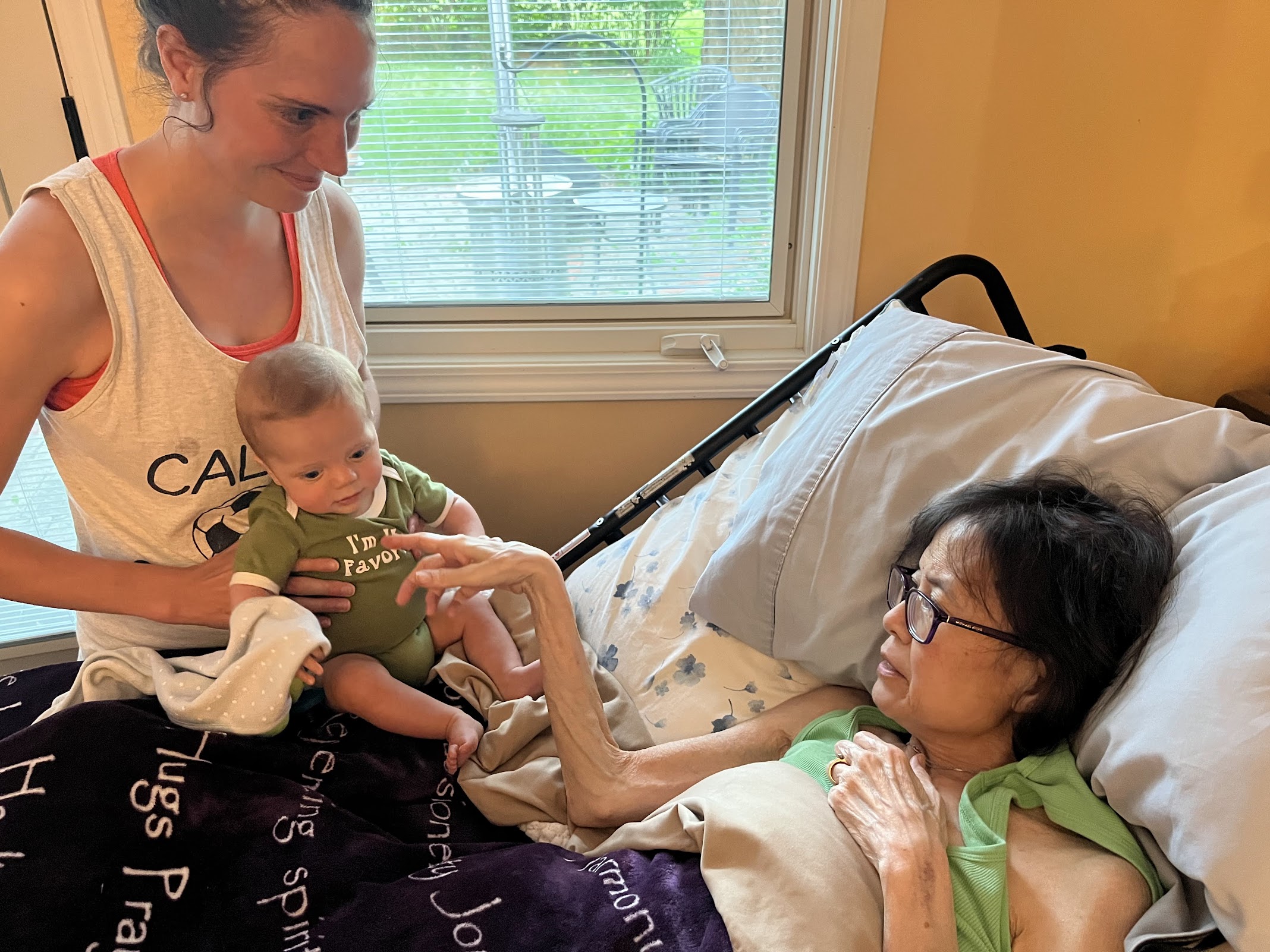
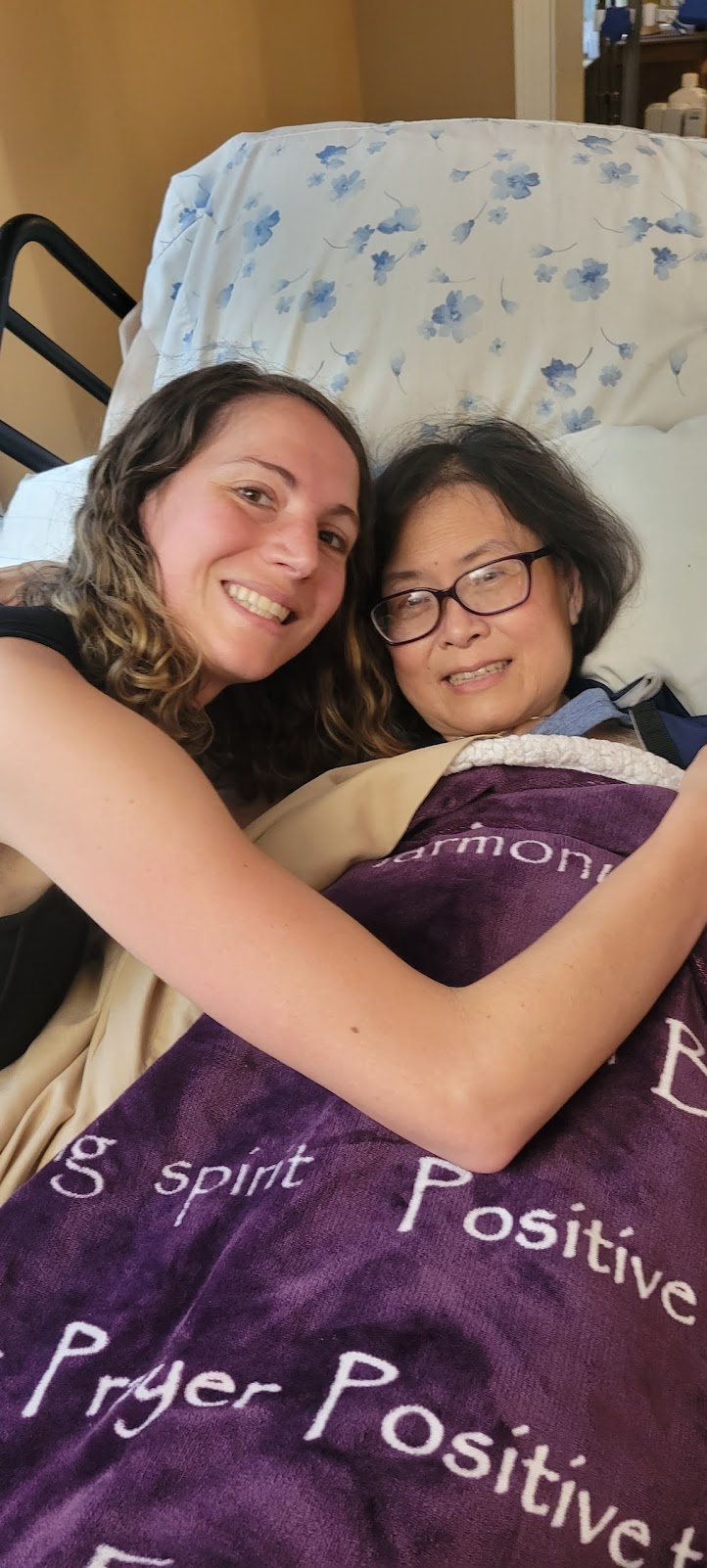
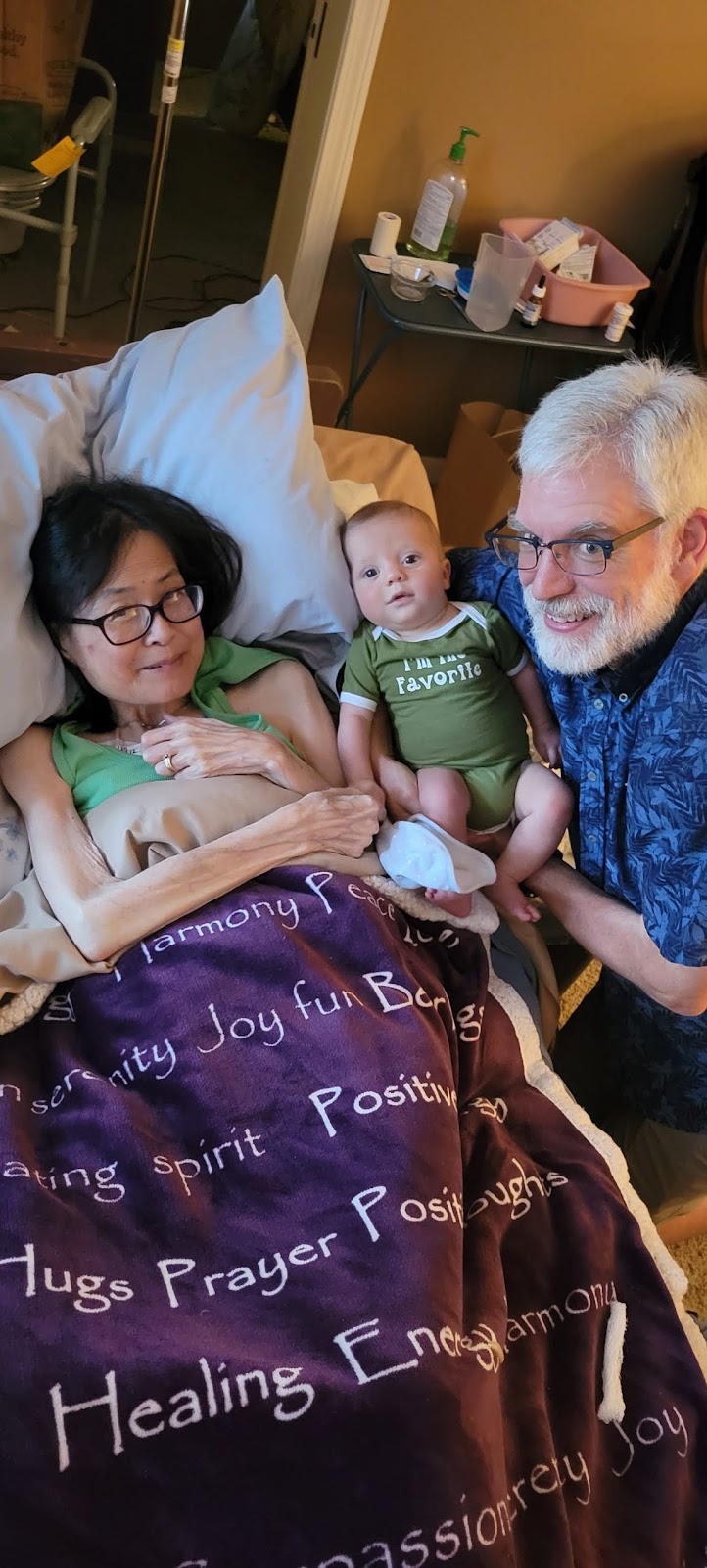
While dealing with medical things has consumed the majority of each day (and parts of each night, too), the highlights of the week were the visits from daughter Nik and niece Paige (and grand nephew Camden). Nik flew in Monday night and left Friday morning. Paige flew in Wednesday night and left Saturday morning. Hannah and Andrew were with us much as they were able to be as well.