This is the ninth of Penny’s Cancerland essays. She was diagnosed with colon cancer in February, 2016. She had emergency surgery in February, followed by recovery, then 12 biweekly chemotherapy infusions beginning in April, and then an even bigger surgery in November, followed by an even longer recovery. This essay reflects on how friends and family responded.
When someone has a baby or gets sick, the folks around them (friends, family, co-workers, faith communities) often try to help. Years ago when the wife of one of my colleagues was battling breast cancer, I popped into his office and asked if I could bring them a meal. He thanked me for the offer. “We have a lot of food right now. We don’t know what to do with all the leftovers.” He laughed. “Someone should write a book one day called: If Cookies Could Cure Cancer.”
“Well,” I smiled. “Let me know if we can help somehow.” But like so many of us when we say that, I had nothing specific in mind just then and my colleague never asked me for anything particular either. Then one day as I was trying to get my own children’s lunches packed, I had a lightbulb moment. That next weekend I baked double batches of cookies and brownies, wrapped them in lunch-size servings, stuck half of them in my freezer, and brought the other half to work. Between classes I marched them over two doors to Herm’s office “Hey, I thought I’d give you the gift of some extra time.” He stopped typing and looked curious. “Here’s two batches of ready-to-pack lunch snacks for your kids. Just stick them in the freezer and haul them out as needed in the mornings.” I turned to leave. “They’re not frozen at the moment, in case you need to do some quality control.” I heard him laugh as I walked back down the hall.
As soon as folks learned that I was in hospital and battling cancer, the offers to provide meals starting pouring in. On the one hand, bringing meals was a great idea because I did almost all the cooking for the household. However, my household is almost impossible to cook for. Here’s the list of culprits and their quirks which makes those provide-a-meal propositions more than anyone bargained for.
One son eats primarily white carbs. Vegetables and most fruit should be avoided if at all possible. Anything that tastes too healthy is suspect. He doesn’t even like regular pizza or apple pie. And he’s lactose-intolerant.
The Husband won’t eat nuts, peppers, or legumes of any sorts. He doesn’t like mushrooms, coconut anything, or Mexican food.
The Gramma is supposed to eat low-salt but doesn’t like much for flavorings other than salt. If a meal doesn’t include meat, it doesn’t really count as a “real meal.” Plus, for several months, she needed all her foods pureed.
The Niece avoids white carbs of all sorts (breads, potatoes, pastas, rices – unless whole grains are involved) and she prefers legumes and veggies to meat-heavy meals, unless it’s something like boneless chicken breasts, Atlantic salmon, or high-grade beef cuts.
The other son really eats almost everything. He loves good salads and cheese but isn’t so keen on baked potatoes, grocery store breads, and breakfasts.
And with my colectomy there was a slew of foods on my naughty list, including fresh veggies, whole grains, nice cuts of red meat, dried fruit, nuts, (really the list was very long). And to throw a twist in the whole thing, after surgery #2, I was supposed to have a fairly high salt diet, ridiculous amounts of protein, and lots of fluids but no fruit juices, carbonated beverages, diet drinks, propel, caffeine, or peppermint tea.
One consolation in the menu planning was that the daughter, with her extreme avoidance of all things dairy, was mostly away at college.
If you examine the above list, it’s like another impossible logic puzzle. What in the world do you say to someone who offers to bring a meal to this motley crew?
When I got sick, the offers for meals, flowers, and cards didn’t surprise me. Girlfriends, colleagues, and people I knew from church would ask if I was up for visitors and to let them know if they could help in any way. Again, no surprises. What did surprise me was when colleagues I didn’t know very well offered to come over and sit with me or to fly from quite far away to help our family (even though one of them admitted that she can barely microwave scrambled eggs). These offers did surprise me. Then one of my colleagues who grew up much farther south than I did explained it to me. “Since moving to Michigan, I have learned to ask before I just go visit people in hospital or at home.” She shook her head. “Back home when my dad passed, we had so many people in the house all the time and they all brought so much food, that we had to ask them to leave so our small family could actually just talk to each other.” She also told how she felt so lonely, when her Michigan co-workers and friends didn’t arrive at her home in droves during a period of illness. “You northerners,” she nodded at me, “you prefer to grieve or be in pain or be cared for by closer family and friends. You don’t need half the town hanging around close by to make sure you don’t feel lonely.”
Of course, she and I both know it’s not so simple. In both the north and the south different sub-cultures have different traditions and expectations. It’s not that my colleague’s southern friends tend towards loneliness or that my northern friends are aloof; it’s our cultural expectations. When a different colleague offered to fly from down south to help out around the house for a few days, we thanked her and politely declined. We would barely expect that of a relative, let only a colleague far away. But I have no doubt, her offer was genuine, because that’s what she and her people do. If the roles had been reversed, we would have sent cards or flowers or both because that is what we do.
After getting to know the customs of some of my more southern-oriented colleagues, I’d like to offer some ideas beyond bringing a meal. After all, some of us hate cooking and others of us have families that are almost impossible to cook for. Also, we can all use some good ideas for ways to support and encourage –ideas that are somewhere in between sending a card and booking a flight to spend a week “keeping company.”
Do what you do best and enjoy. Don’t offer a meal if you hate cooking – especially if you’re not very good at it. I think it’s also okay to offer to pick up take-out from a favorite restaurant.
If you do like cooking, I recommend doing what one of our amazing colleagues did. They looked up 5 recipes online that seemed to be within the realm of possibility for our nearly impossible pack. They sent us the web links and asked us to choose which recipe we would most like and what if any changes to make.
If you have a car and flexible schedule, offer to play chauffeur. If you’ve had a sick spell anything like mine, you know that there is no shortage of opportunities or need for someone to take you to a medical appointment. I was lucky that all my kids are old enough to drive themselves to their commitments, but if your friend’s children are young, they might need a small army of chauffeurs for everything from soccer games and trumpet lessons to play practice and girls’ club.
If you like shopping, offer to shop. Does he need some smaller shirts because he lost weight? Go buy 4, let him choose the one or two he likes best, and return the others. Does a child in the family have a birthday coming up? Ask for a list of options and offer to do the legwork (online or in store).
Are you more introverted? Not every act of kindness needs to involve long or face-to-face interaction, which can be good news both for very sick patients, as well as for introverted patients and supporters. Leave the box of brownies on the porch bench and text from the end of the driveway (not while actually driving). Pizza places aren’t the only ones that deliver. And you can stuff a lot of little surprises into one of those Priority Mail boxes. Many gifts or shows of support can also be given anonymously. (We still don’t know who sent us the red container of flower bulbs that grew into 20” tall “soft whites” that bloomed beautifully through a snowy February. Thank you, whoever you are!)
Can you deal with computers and the internet? Perhaps your sick friend could use help setting up automatic payments for bills to avoid late fees.
Taxes, anyone?
Double dip into what you are already doing.
If you are going grocery shopping, ask if you can pick up a couple bags’ worth of items. Ask for a list of top needed items. If they offer to pay, fine. If not, it’s still likely to cost less than delivered flowers. Or you can just consider “paying it forward.”
If you have library items to return, pick up some books for your friends or their kids and then offer to pick the items up and return them to the library again in two weeks. Your friends could even go online and reserve books for you to pick up later. (This assumes you have friends that still enjoy such wonderful, “old” technology as physical books.)
If you have a basket of mending to do, offer to sew on a button, fix a seam, or patch a hole. (People still do that sometimes, right?)
Ask if your friend has any prescriptions that need to be picked up this week or tell them to text a request the next time there is a need. There’s almost always something you can pick up for yourself at a drug store. (We’ve lost count on how many times even in one week, one of my boys has had to make a run to the pharmacy. On some days, it would have been nice to have a “drug runner.” Note: You may need a birthdate or other info and exchange of money may be involved.
I also hear that there is this thing called “ironing” which is still practiced in some families.
Laundry. I certainly hope that this is practiced regularly in households everywhere.
Think just outside the box
If you know that your friend usually picks up his mother for lunch on Fridays, ask if you can pick up his mother and some take out and bring them both over for a lunch-in.
Does your neighborhood, faith community, school, office, factory, club, etc. have a list of duties that rotate? Look ahead on that list and volunteer to take over the next duty that is assigned to your sick friend.
If thank-you cards are part of your sub-culture, buy a box of them, pre-stamp all the envelopes and drop them off.
Is there a gifting occasion on the horizon: Christmas, Hanukah, a birthday? Offer to wrap all the gifts. Take notes or get labels about which gifts are for which persons.
Make it easy for the patient to say “yes”. Have a concrete suggestion of something you’d be willing or love to do and make it sound like it’s no big deal.
Call and tell your friend that you’re planning on stopping by the bakery tomorrow on the way home for work. Would they like some bread, cookies, or a pie?
Tell them you made way too much chili and it’s in a disposable plastic container, could they use it now or freeze it for later?
Call and explain that you have caved and are taking your kids on Friday after school to that new movie. Could you please take the patient’s kids along too?
Text, call, email and tell your friends that there is a 2fer deal (on the gourmet coffee you both like, frozen lasagnas, jumbo cans of chicken noodle soup, black forest tortes, … whatever.). You really don’t need two, would they like one?
The best unexpected gifts we got during the last year of surgeries, cancer, chemo, and accidents included:
A soft blanket with bright whimsical flower designs that spent 10 days in the hospital with me. I lost count on how many nurses, nurse-techs, doctors, and visitors commented on what a great blanket I had. In a rather sterile room of bland decor and scratchy white bed linens, that blanket was a constant comfort.
A facial. Some salons or spas have special deals or even complimentary services for cancer patients. Chemo and fatigue do not leave you feeling particularly beautiful. My husband surprised me with an appointment at a local spa. (I had never had a facial before. Little does he know, that such lovely pick-me-ups just might be addicting.)
A certain brother-in-law stripped the old caulk, bleached, and re-caulked our shower, while visiting for a few days AND cooking meals for the family every evening. (No, he’s not for sale, as far as I know.)
Hand-knit socks and brightly colored, whimsical store-bought socks. (I would save the socks for chemo days or appointments when I was expecting bad news. One glance down reminded me that someone loves me.)
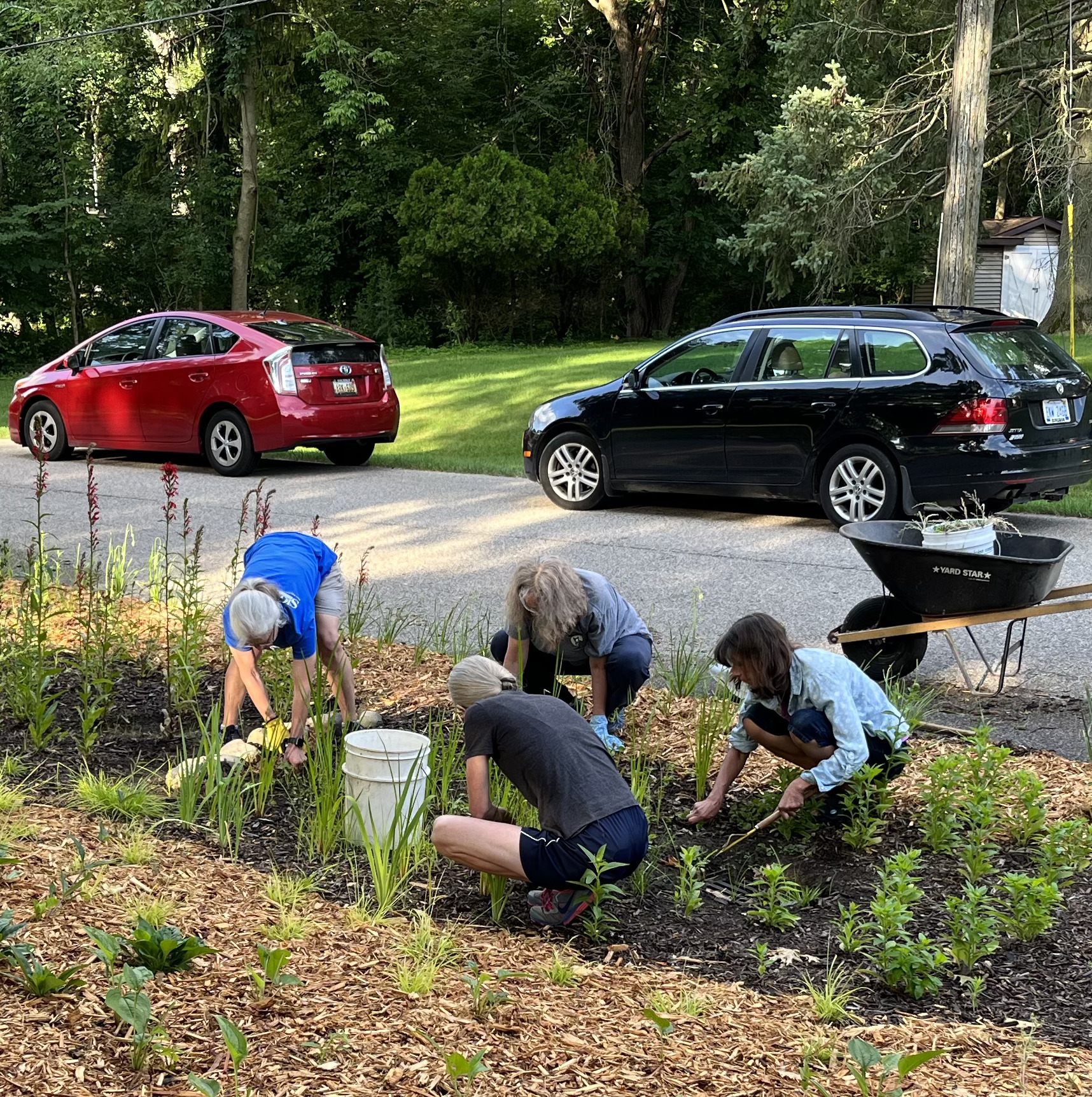
A group of amazing women actually spent an afternoon weeding large sections of my backyard. (Weeding is right up there with caulking bathrooms on my list of things that might be deemed forced labor around our home.)
An amaryllis bulb that arrived as a humble pot of dirt with a promise of beauty to come. (Like a metaphor for hope and recovery: over about 2 months it steadily grew and then produced outrageous, beautiful blooms.)
A hired house cleaner for a huge number of hours that got us through months of recovery. (This surprise, organized by a special friend with a gift for organization and funded by several groups of persons who knew or worked with me or my husband, was given a big thumbs up by every person in the family. My mother loves a clean and tidy home and has suffered in her years living with the rest of us more laid back housemates. My sons actually cheered because they are the ones who have done most of the vacuuming and sweeping and rug shaking since Mom got cancer. And I can assure you that it is a great delight to return home from yet another medical appointment to clean lemony smells, a sparkling counter top, and a bedroom floor devoid of dust bunnies — some of which had been around so long they deserved to have names.)
A Sunshine Basket – a basket for the whole family filled with small wrapped packages in many shapes. The instructions read: Anyone may choose and open a surprise if they need a pick me up on a bad day. If that present doesn’t suit you, give it to someone else and try again. The 25+ little gifts included a huge variety from play-dough and fun markers to instant soup mix, tea bags, and a Mad-Libs tablet, to scented candles, hand cream, and, of course, chocolates.
Best unexpected gift I heard of last year:
- At the company where a sick friend works, his co-workers (who could and wanted to) each donated a few of their saved up sick days. In the end, my friend didn’t have to take any unpaid leave. He had all his needed long time off of work covered by the generosity of his colleagues. Isn’t that awesome?!
Caring for the care-givers
One of my husband’s colleagues surprised him with a care package designed to sustain HIM in the waiting room during my long surgery and the many hours and nights spent at my bedside in the hospital and at home. I was too sick and out of it to really notice much, but I remember that the little surprises included lots of snacks and a deck of cards.
Offer to patient-sit. I know I needed a sitter several times when Rand had to be away and no one else in the house was available. (We all agreed that neither the dog nor the cat counted.) There were also times when I’m pretty sure I would have been fine for a few hours of alone, but it was a relief to my husband to know that one of our friends was going to be with me anyway.
When the primary caregiver cannot make it to an important appointment, it can be a great gift to offer to go along and to take very good notes. In my case, I knew I wasn’t going to remember everything the doctor said at some of those appointments. (I blame “chemo-brain.”) Having an organized friend along allowed Rand to skip an appointment when he needed to.
Sometimes care-givers need a little pampering too: a gift card for a massage, a thermos of soup, a run together on a Saturday morning, a container of their favorite flavor of Ben&Jerry’s ice cream…. You get the idea.
Tis a gift to be simple
If you are feeling overworked, underpaid, over-committed, struggling with your own illnesses or caring for other persons, you do not need to apologize for not “helping more.” My northerly friends may already know this; my southerly friends may need to hear this. Never underestimate the positive effects of those small acts of encouragement: words exchanged in the breakroom, a card sent, a phone call, a voice message, email, a text message, even a note left on someone’s computer monitor, locker, or screen door.
Sometimes what patients and care-givers can use most is just someone to be there. We don’t always need pithy sayings, religious slogans, words, or even lots of hugs, tears, or pats on the back. Sometimes we just need to sense you there, feeling all the mix of pain and fear, loss and sadness, uncertainty and hope that we’re feeling too.
Some of us (the patients) push back against needing or accepting help. We don’t want to impose or be a burden. This past year knocked me off my imagined podium of independent self-sufficiency. Guess where I landed: in the embrace of the communities that I am part of.
This essay was written sometime around a year into the Cancerland residency. Over the following seven and half years, there were many more ocassions where people helped us in one way or another – especially in the last six months, as Penny’s health continued to decline.
In our house food was a tricky thing, and not just because of the wide range of dietary restrictions. It was actually the kids who first suggested that we just decline offers of food. What they really wanted were the family favorites, made the way they were used to. And I think they liked the rihythm of preparing and cleaning up from a meal. It made things feel more normal. And normal is good in challenging times. In he end, we all agreed that often receiving food was more stressful than preparing it ourselves – mostly.
Even given all the food issues and the general preference to prepare our own food, there were also several ocassions where an offer of food came at the right time, and was the right thing, and everyone appreciated it. We aplogize for being so complicated.
And despite our family’s particular food issues, it hasn’t stopped us from offering to bring food to others. Everyone is different. They key is to match the needs and wishes on one side with gifts and abilities on the other.
So I’ll put in a plug for second degree helping. If you know someone well and they need help, you may be the person who knows best what they need and how to offer it – even if you are not the person who will be doing the helping yourself. You might also be the person who can ask “What would help?” and get the real answer.