This is the eleventh of Penny’s Cancerland essays. She was diagnosed with colon cancer in February, 2016. Emergency surgery in February was followed by recovery, then 12 biweekly chemotherapy infusions beginning in April, and then an even bigger surgery in November. By February 2017 we had just begun the long, slow process of regaining the 30 pounds she had lost following the surgery. This reflection was written sometime after our February trip to hear our daughter perform as a soloist with the St. Olaf Band.
This February I got to hear my daughter in concert as a featured soloist with the St Olaf Band. As the last low notes faded, one of those tingling pregnant moments of silence filled the auditorium before the audience burst into applause. I fought back tears, not because the music was so lovely, though it was, but because I had feared I wouldn’t make it to that concert at all. When she was asked to solo on tour in Florida with the band, we had dreams of going to hear her. Florida in January sounded like the perfect thing to look forward to after surgery. But the weeks of slow recovery turned into months with the slog of medical appointments, medication adjustments, battling constant nausea, fatigue, and the physical challenges of healing from a huge abdominal surgery. We never felt that we could book those flights to Florida, our window of opportunity closed, and I saw myself relegated to listening to the livestream heard through mediocre laptop speakers.
Our last chance was the home concert – a week after returning from tour, the band would play their entire concert back on campus in Minnesota. Thankfully, everything worked out: the mid-west snow storm didn’t happen, the meds aligned so that I was both alert and not feeling nauseous at concert time, and there was no ostomy bag explosion the entire weekend. On a cold Saturday afternoon, I sat happily and gratefully enjoying each soulful note from my daughter’s clarinet.
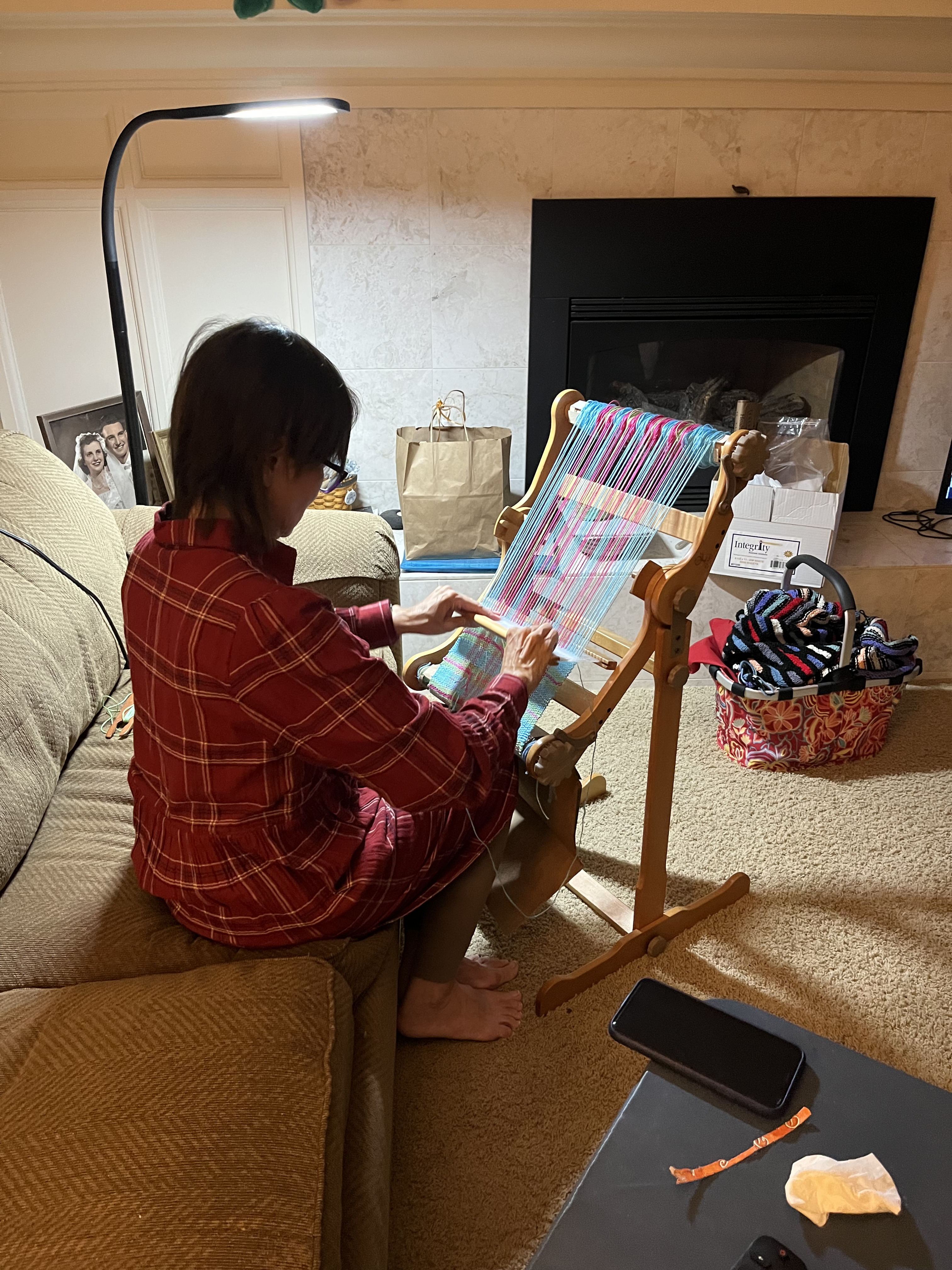
Life is like that now: closed doors and small victories. Many of the assumptions, dreams, and hopes for my future, especially the far away future, lie behind closed windows or doors. I’m one of the folks who wants to live to be 100. I’ve got a long list of things I want to do, including learning Chinese, living for a month each in different cities and countries around the world, not to mention finally figuring out how to use that loom I bought ten years ago at a going-out-of-business sale.
Then there are those hopes for the future that many of us have. Nurturing relationships with grandchildren. Enjoying big family reunions. Watching children settle into rewarding careers, relationships, and life journeys. Retirement years filled with volun-tourism, writing projects, and relaxing sunsets. I may get a chance to venture there, but I very well may not.
Am I okay with that? No. It sucks. Do I have a choice? No, and that sucks, too.
At one point last autumn when the twelve cycles of chemotherapy were behind me but blood work indicated cancer was growing somewhere, I got the results of a scan that indicated that there was no cancer on the ovaries. With a sigh of relief, I placed an order for yarn – lots of yarn and a pattern to make a blanket. It seemed like I had been granted a bye – the worst had been averted and I could ponder and hope for the chance to embark on and complete a big project, like a knitted blanket. i
Not long after the large box of project supplies arrived, we got the bad news: the cancer was back with a vengeance. I had a year to live, if that. The only hope was a pretty radical, aggressive, miserable surgery. The box sat unopened for months in the corner of our bedroom, a reminder of a hopeful moment and some harsh realities. I’ve since opened the box and put the yarn and the pattern in a storage drawer, still not sure how I feel about that particular purchase and project. Do I wish I’d never bought that yarn? I guess not. Moments of hope pull us through.
But are moments of hope enough? I’m now in remission. Four times a year, the doctors order blood work and a CT scan. When the results come back negative, I get a little giddy. Time to order supplies for another project. But in another three months there will be another scan, another result. In some way, I’ve lost that ability to dream big. Why invest generously in my retirement account, or buy into a time-share, or purchase all the yarn needed to knit each child a blanket? We’ve been told to expect the cancer to return. According to some study, sixty percent of folks have a recurrence within five years. That means 40% don’t, right? But I don’t play the odds anymore. I wouldn’t know how to place my bets.1
In those days between my dire diagnosis and the big terrible surgery, I would burst into tears thinking about all the things that probably wouldn’t be part of my future, all the closed and closing doors. I suspect that’s normal. Grieving and lament for the losses is a part of Cancerland that I think every resident experiences. Before and during recovery from the second big surgery, we seemed engulfed by the Kingdom of Grief and Lament. Sunnier parts of the world could only be glimpsed from a distance, if at all. I wanted to be angry, but I didn’t know whom to be angry at. And, honestly, I didn’t have the energy to be angry. A shower in the morning would wipe me out until mid-afternoon.
I’m still very aware that tears of lament have seeped into other parts of my life. I hesitate to outline work projects farther out than a year. I work to tame the selfish child in me that wanted to travel and have fun this summer and not stay at home caring for an ailing parent. I get frustrated at the fatigue that sets in when I still have so many things I want to accomplish in a day. I’m sick of the constant adjustment of meds and diet in an as yet unsuccessful attempt to get some normalcy back. And I hate needing to know the location of the nearest toilet in every public and private building I spend time in. Some days I am painfully aware that I wear tear-stained clothes.
•
I don’t have a solution for the ongoing lament, because the potential losses keep coming. They’re almost endless in a way. My friends return from a vacation biking around the Netherlands, just the sort of trip I might have enjoyed. Other friends are planning a trip to China while their daughter is studying there; China used to be on my bucket list. Two girlfriends enjoyed the weddings of their children in the same summer; that door isn’t closed but it isn’t wide open either. When I look that direction, some of the watery images are of weddings without me there at all.
No solutions. I think I live with the garments of lament hanging prominently in my wardrobe. But now six months out from our first news of remission, I no longer dwell in the Kingdom of Grief and Lament. I’m a permanent resident of Cancerland for sure, but I’m exploring other kingdoms within reach, enjoying both sunshine and rain. There are days when I choose to wear the soft colors of hope, when I can share smiles and joys, tea and tears with friends and family, when I can start knitting a scarf for my son or savor the sweet notes of my daughter’s clarinet solo.
I don’t have a choice about my resident status in Cancerland. I may not be able to open certain doors in the future. But I do have lots of choices, choices about what I do where I am. I can stand in the rain to hide my tears. I can also carry an umbrella, jump in the puddles, and enjoy a hot cup of tea afterwards. You get lots of metaphors for this precarious, frustrating, and still wonder-filled life, because I don’t have answers and solutions. I’m just muddling through.
No, change that. I’m carefully choosing a path, a journey worth taking. It’s not the one I had in mind 18 months ago, but despite the losses and the lament, and perhaps in part because of those experiences, the journey will be filled with as much good as I can find. And each good morsel will linger sweet like honey.
CEA (Carcinoembryonic Antigen) is a protein that in some people responds to the presence of certain cancers. This was the thing that was alarmingly high after the first round of chemotherapy in Summer 2016. Normal levels should be between 1 and 5. Penny’s measured 30 immediately after chemotherapy and increased rapidly from there. It was over 75 by the time of the Big Surgery that November. Post surgery it dropped to 1. That and the judgement of the surgeon landed Penny in “remission.”
Every three months CEA was checked. Every time it was higher. I gathered data and fit a model: the CEA level predictably doubled about every 100 days – 2, 4, 8, 16. We could see where this was heading, and by Summer 2018, it was time to resume chemotherapy. The week before chemotherapy was to begin, we took a short vacation in southwest Michigan. Nothing like the bigger travels we had always looked forward to, but some time away, to do some fun things.
On our way home we picked up Tasman, our “therapy dog.”
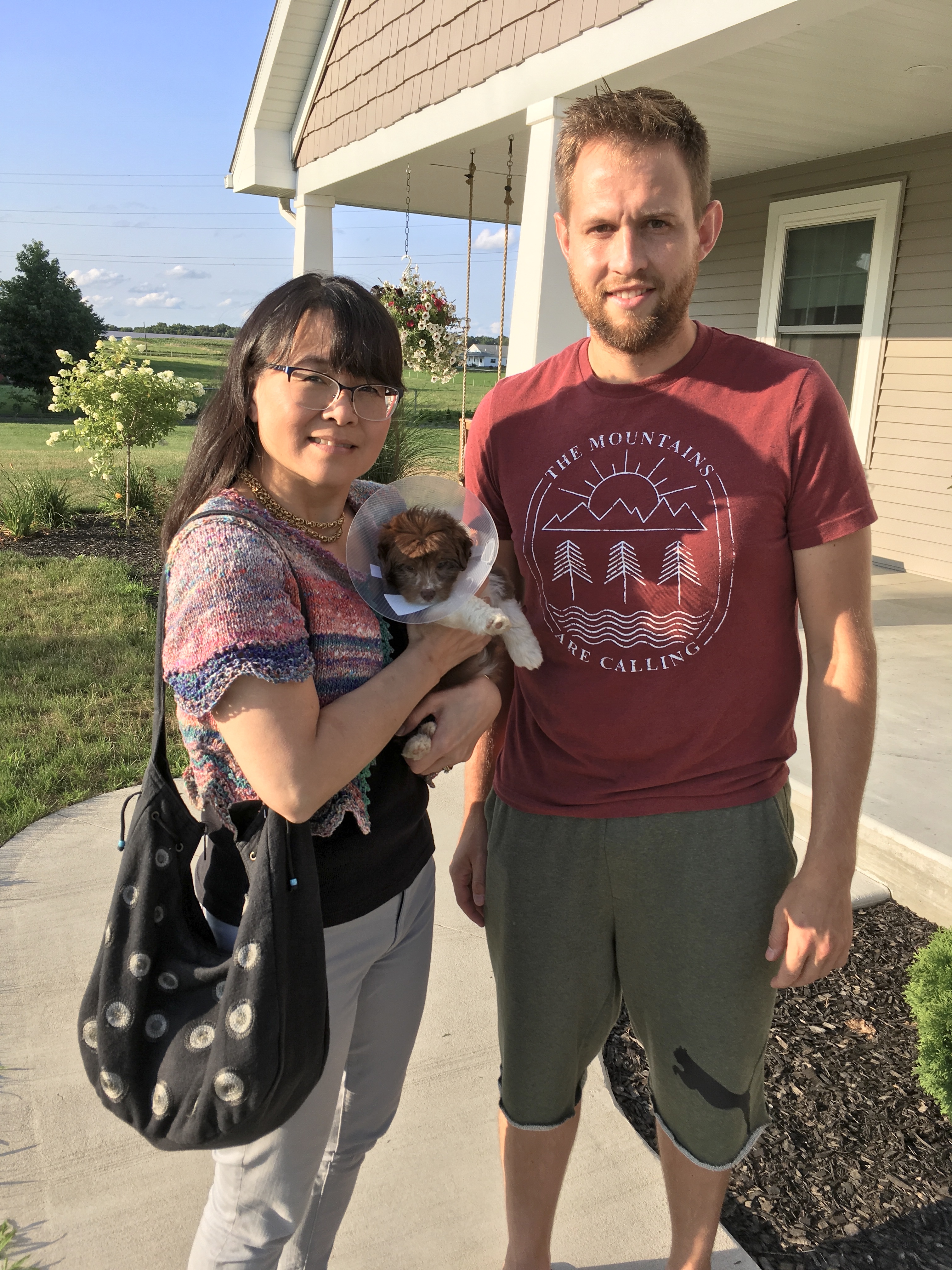
Taz adapted quickly to her role, staying close to Penny as she went through the unpleasant days of chemotherapy.
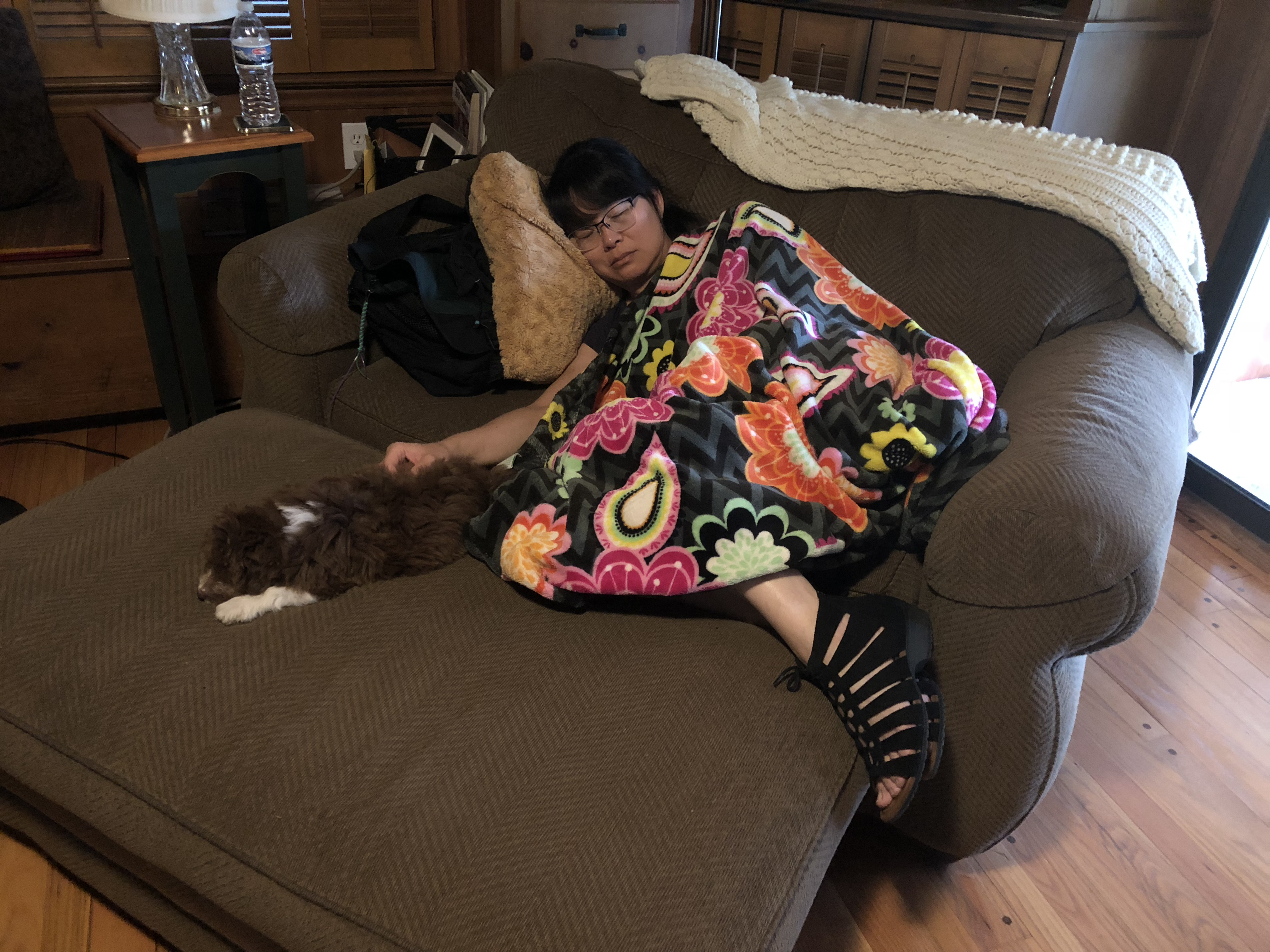
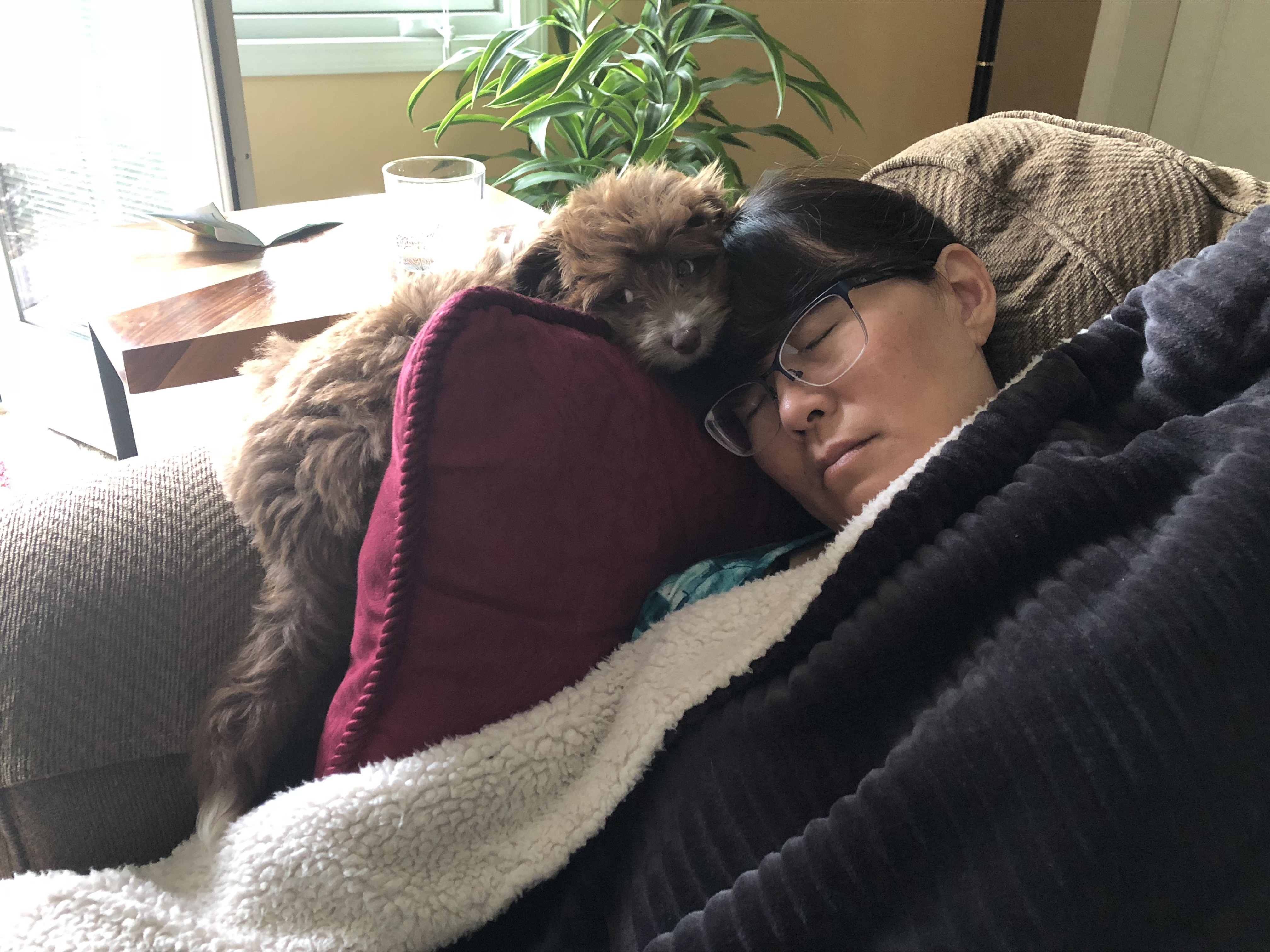
Three weeks later, Penny’s good friend Lynne came from Providence to spend some time. The big event was to be a trip to a fiber arts festival and some weaving lessons from Lynne. I remember getting a call from the fiber arts festival asking for some dimension of the “little loom”. And then another saying they were returning early because Penny wasn’t feeling well. Penny ended up spending the rest of Lynne’s visit in the hospital with a bowel obstruction – but not before Taz did her best to bring some comfort.
The weaving lesson had to wait until another visit some years later. Penny never graduated to the big loom we had gotten at the going out of business sale. We gave that loom to Lynne the last time she visited, and she’s working to restore it to its previous glory.
Footnotes
We later learned that the median life expectancy with Penny’s diagnosis is 3 years. The main surgeon for the Big Surgery has since told me that Penny lived longer after that surgery than any patient she has had. So in many ways, we beat the odds.↩︎